
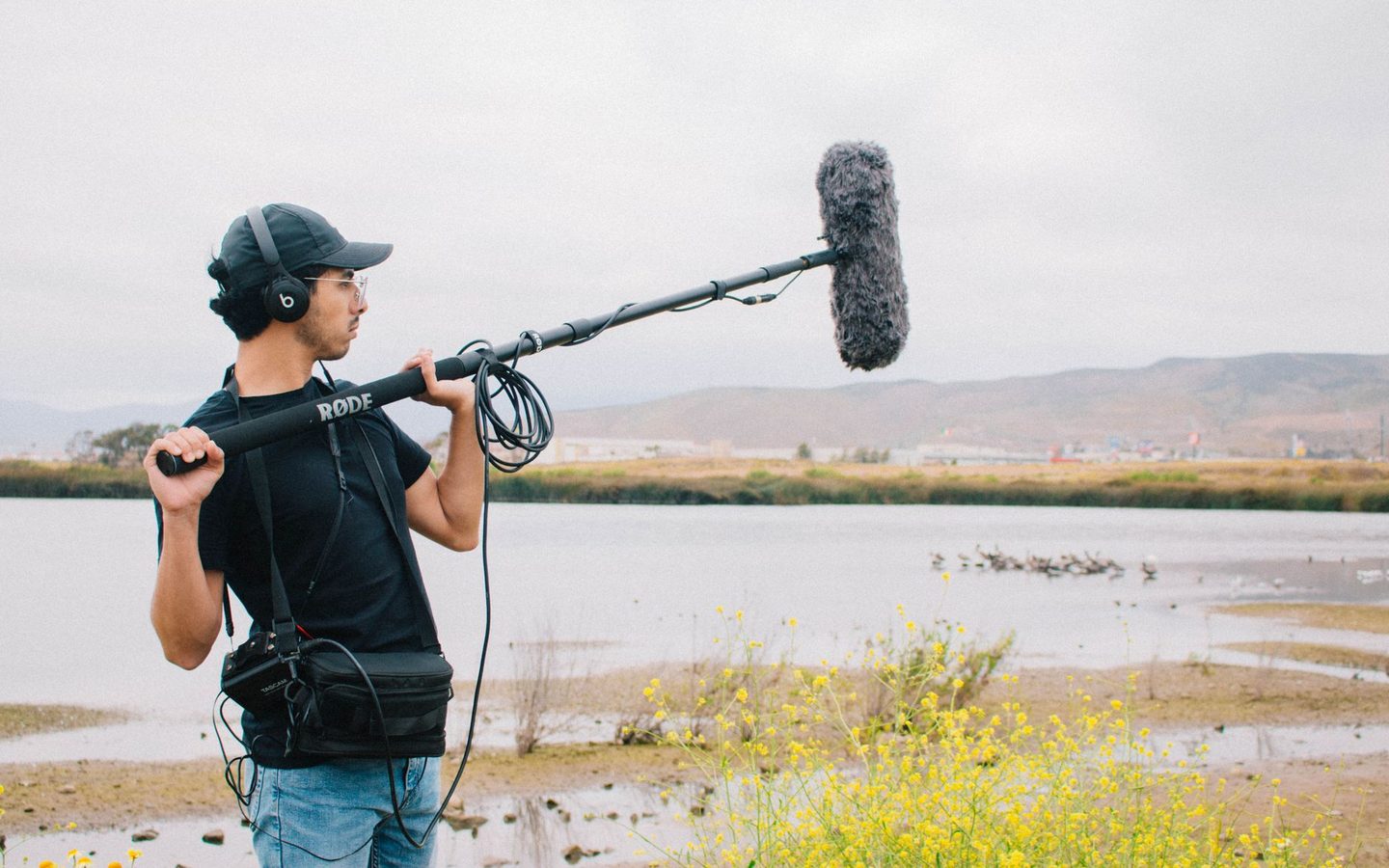
Camera and sound operator
Capture usable picture and sound, in the studio and on location.
- Block code
- AUDIO-PDV
The format
Three months, two hours a day.
- Certificate programme · 128 h
- Two hours a day
- 250,000 F — the same fee for all sixty
- All in the same format, at the same fee.
The qualification
A CQP under MINEFOP accreditation.
- Leads to the CQP — Certificat de Qualification Professionnelle, which the ministry used to call the AQP.
- Awarded under MINEFOP accreditation.
- The full programme for the same profession remains open to anyone aiming for the complete qualification.
Sessions
A new session opens every quarter.
Next intake: Monday 5 October, with enrolment open until 9 October. The following one starts on 4 January 2027.
- First-quarter intake — enrolment closes on 9 October5 Oct.
- Second-quarter intake — 20274 Jan.
Objectives
What you will be able to do.
Set up a camera: focal length, aperture, shutter, sensitivity
Control exposure with the dedicated tools and avoid the pitfalls
Frame and compose, and carry out a camera move
Choose a microphone for the situation and set usable levels
Treat the acoustics of a location with makeshift means
Light with the three-point method and make use of natural light
Prepare and run a shoot: location scouting, permits, safety, backup
Programme
Four modules.
Module 0132 h Module 0232 h Sound recording
Module 0332 h Lighting
Module 0432 h The shoot: preparation and running
Who it is for
Who it is aimed at.
- Complete beginners with an interest in picture and sound. No technical prerequisites: the block starts from how a sensor works.
Afterwards
Where it leads.
- Camera operator, sound recordist, production assistant, live capture operator. This is the entry block for the audiovisual sector.
Method
How it works.
Systematic alternation between short theory sessions and practical work, with most of the time spent on practice
Progression from simple to complex: each module builds on what was learnt in the previous one
Realistic role-plays drawn from Cameroonian business cases
Considered use of generative AI as a working tool, in line with the common core
Regular formative assessments and a final integrative project drawing on all four modules
Assessment
How you are assessed.
Formative assessment at the end of each module (graded role-play and practical exercises)
Practical work assessed against competency sheets
Final integrative project, presented and defended before the trainer
One graded assignment per module in the online course space
Tools
What you work with.
Video cameras or mirrorless cameras with manual controls
Lavalier, shotgun and handheld microphones; external recorder
LED panels, reflectors, diffusers
Tripods, stabiliser, field monitor
Templates for call sheets, shot breakdowns and filming permits
Keep exploring
In the same field.
Join the next session
Ready to get started?
Sessions open every quarter. Apply now or request the detailed brochure — our advisers will get back to you.