
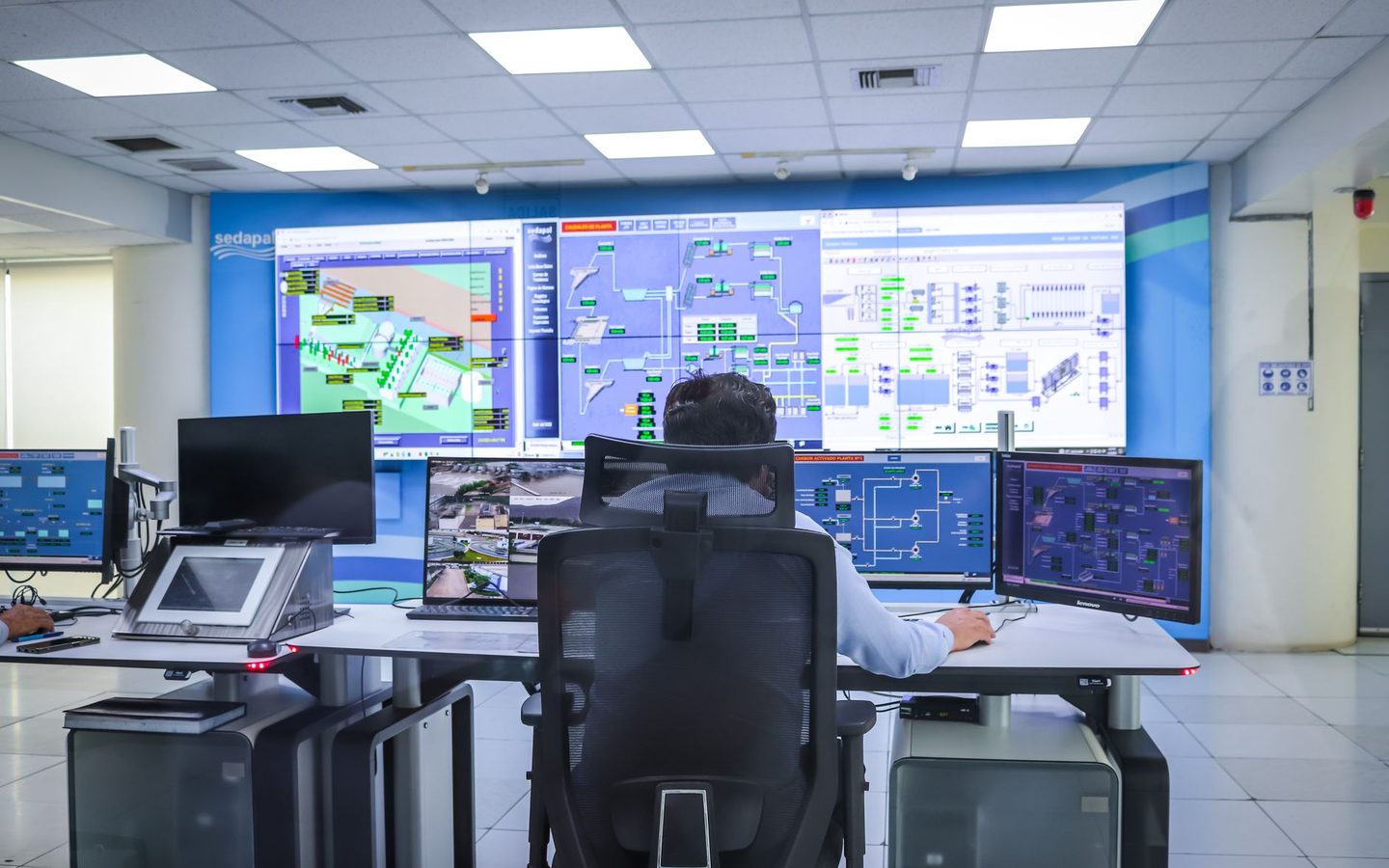
Security operations analyst
Detect an incident, qualify it and respond to it by a written procedure.
- Block code
- CYBER-SOC
The format
Three months, two hours a day.
- Certificate programme · 128 h
- Two hours a day
- 250,000 F — the same fee for all sixty
- All in the same format, at the same fee.
The qualification
A CQP under MINEFOP accreditation.
- Leads to the CQP — Certificat de Qualification Professionnelle, which the ministry used to call the AQP.
- Awarded under MINEFOP accreditation.
- The full programme for the same profession remains open to anyone aiming for the complete qualification.
Sessions
A new session opens every quarter.
Next intake: Monday 5 October, with enrolment open until 9 October. The following one starts on 4 January 2027.
- First-quarter intake — enrolment closes on 9 October5 Oct.
- Second-quarter intake — 20274 Jan.
Objectives
What you will be able to do.
Choose the sources to log and discard those that cost without adding anything
Centralise, timestamp, normalise and enrich events
Place an attack technique within the MITRE ATT&CK framework
Write, test and tune a detection rule
Triage an alert by severity, scope and urgency
Contain, eradicate and restore service while preserving evidence
Use an AI assistant for triage without delegating the decision to it
Programme
Four modules.
Module 0132 h Module 0232 h Detection: rules, signals and false positives
Module 0332 h Qualifying and handling an incident
Module 0432 h AI in detection: use and distrust
Who it is for
Who it is aimed at.
- Learners who have mastered systems and networking fundamentals — in practice those who have completed Endpoint and network security technician or Network administrator. Ease with the command line is required.
Afterwards
Where it leads.
- Level 1 security analyst, security operations centre operator, detection and response technician. Natural next step towards investigation (Digital forensics and crisis management).
Method
How it works.
Systematic alternation between short theory sessions and practical work, with most of the time spent on practice
Progression from simple to complex: each module builds on what was learnt in the previous one
Realistic role-plays drawn from Cameroonian business cases
Considered use of generative AI as a working tool, in line with the common core
Regular formative assessments and a final integrative project drawing on all four modules
Assessment
How you are assessed.
Formative assessment at the end of each module (graded role-play and practical exercises)
Practical work assessed against competency sheets
Final integrative project, presented and defended before the trainer
One graded assignment per module in the online course space
Tools
What you work with.
Wazuh or Elastic — collection, normalisation and detection
Sysmon and Windows logs, systemd and auditd logs on Linux
MITRE ATT&CK framework and Atomic Red Team for detection testing
An analysis sandbox and harmless samples
An AI assistant with controlled instructions for alert triage
Join the next session
Ready to get started?
Sessions open every quarter. Apply now or request the detailed brochure — our advisers will get back to you.